

Content
While it is possible for a user to “self-relay” transactions, there does exist a liveness assumption that relayers will continuously forward data. In other words, they are not decentralized like much of the cryptocurrency industry, so users must put their trust in a third-party. It is important to only use trust-based bridges with a good reputation since you essentially put your valuable digital assets in their hands. The bridges provide seamless transactions between popular blockchain networks. In addition, every bridge has a different approach to operations based on its time.

There are over 100 active public blockchains, many of which have their own unique applications, users, geographies, security models, and design trade-offs. Despite what individual communities believe, the reality is that the universe tends towards entropy, and the number of these networks will likely continue to increase into the future. In this AAG Academy guide, we’ll look at how blockchain bridges operate, why they are needed, and some of the biggest benefits and risks they bring. A blockchain bridge, otherwise known as a cross-chain bridge, allows two blockchains to be connected so that users can send cryptocurrency from one chain to the other. They have become incredibly important to the industry because they solve one of the biggest problems that users have faced as cryptocurrency has become more and more popular over the years. Snowfork is building a general-purpose bridge between Ethereum and Polkadot.
What are the biggest blockchain bridges?
The blockchain bridge will deliver you the wrapped token equal to the coin’s value once it has been received at the other end. Ethereum, Binance bridge, Avalanche, and Polygon PoS are some of the most famous bridges available. It was December 2008 when the concept of Blockchain spread to the world due to Bitcoin’s whitepaper release. An entirely new ecosystem unsurfaced, and people’s interest in programmable blockchains and cryptocurrency usage spiked high. Various newer blockchains based on different consensus protocols came into existence shortly afterward. Blockchain bridges are a service, and so have to charge fees to cover development costs and reward users who might be providing liquidity.

Untrusted bridges are completely decentralized and operate on smart contracts and algorithms. Blockchains by themselves operate pretty effectively, but with so many popular chains now in use, there are times when users have the need to send tokens, NFTs, and other digital assets between them. A cross-chain bridge allows inter-network communication and transactions what is a blockchain bridge and how it works to happen as effectively as currently possible, creating a much greater cryptocurrency ecosystem. Blockchain bridges have become one of the inevitable necessities for the decentralized application ecosystem. The restriction on interactions between different blockchain networks creates limits for decentralization, the core principle of blockchain technology.
Risk using bridges
Each computer runs a piece of software that describes how each point of the network can agree on the true state of the data stored in the chain without any central coordination. A blockchain is a database maintained across a distributed network of global independent computers with no one in charge. They provide revolutionary new ways to manage any type of data without formal hierarchies, from digital payments to tokens or the latest state of a shared agreement. Blockchain bridges are technical solutions for transferring data back and forth between two blockchains. Furthermore, the best bridges will be the most secure, interconnected, fast, capital-efficient, cost-effective, and censorship-resistant.
What are Blockchain Bridges? Here's All You Need To Know – https://t.co/mU8NsZRar9
Despite the growing number and scale of blockchain networks, they remain largely isolated from one another, like islands with their own cultures and economies that cannot share i…
— Crypto Magazine (@CryptoMag01) December 31, 2022
Both reliable and trustless methods may have underlying technological faults. To be more precise, a trusted bridge’s centralized feature has a primary pain point, but trustless bridges are vulnerable to flaws in the application and the underlying code. But, if there is any issue with the smart contract, it is almost certain that someone will try to take advantage of it. There are architectural flaws in both trusted as well as trustless platforms that compromise the security of the blockchain bridge in various ways. Rubic Bridge, a decentralized bridge, will be launching soon on Ledger Live.
Token
According to the documentation, an Avalanche transaction on AB will take a few seconds, while an Ethereum transaction may take up to 15 minutes. This “lock-and-mint” and “burn-and-release” procedure ensures that the quantity and cost of tokens transferred between the two chains remain constant. The lack of cross-chain interoperability between blockchains is the reason why Bitcoin can’t operate on Ethereum.
The internet’s great interoperability is one of the reasons it is a revolutionary system. Enhancing interoperability and wide-scale adoption of the blockchain sector requires blockchain bridges. They have made it possible for consumers to exchange assets between numerous blockchain protocols, which has enabled some crucial improvements. The number of bridges, users, and overall transaction volume for blockchain bridges have all increased dramatically. Actors monitor events on the source chain and generate cryptographic inclusion proofs about past events that were recorded on that chain. There is a requirement for some actor to “relay” the block headers and proofs.
Ethereum is built on blockchain technology, allowing for a wide range of decentralized applications. These applications include finance, healthcare, and supply chain industries. Ethereum is a decentralized, open-source blockchain platform that enables the creation and deployment of smart contracts and decentralized https://xcritical.com/ applications . It was first proposed in 2013 by Vitalik Buterin, a programmer and cryptocurrency researcher, and officially launched in 2015. One characteristic of a cross-chain bridge is that it enables users to exchange one cryptocurrency for another without first changing it to fiat currency.
Replies to “Blockchain bridges: Guide to cross-chain data sharing”
While fluid and somewhat efficient as single entities, each blockchain is limited by the walls of its own domain. If you did this frequently, you would need to trade bitcoin for ETH on a trading site, withdraw the money to a wallet, and then re-deposit it on another exchange. By the time it arrives, you’d have paid more fees than you had initially intended to. A centralised service verifying data is a single point of failure because it can censor a transaction or simply abuse the trust that you have to place in them. The other natural off-chain destination for Solana assets is Bitcoin and similar PoW chains. REN VM Bridge again uses the lock-and-mint approach to bridge BTC, BCH, ZEC and DOGE.
In this way, relays can validate the whole history of transactions as well as certain central headers on demand. However, some relay solutions, such as BTC Relay, necessitate a significant expenditure in order to run and provide operational security. Trust-based bridges, also known as federation or custodial bridges, are centralized bridges that require a central entity or federation of mediators to run. In order to convert coins into another cryptocurrency, users must rely on the members of the federation to verify and confirm the transaction. The federation members are largely incentivized to keep transactions running; they are not focused on identifying and preventing fraud.
- The new-gen Internet requires primary interoperability to function properly as a complete unit.
- The incident, which is one of the biggest heists in the history of cryptocurrency, specifically siphoned funds from a service known as the Ronin Bridge.
- It is easy to get lazy when you don’t have a boss to report to, which is often the case in a decentralized network.
- The blockchain bridge by Binance serves as a bidirectional bridge between Ethereum and the main Binance chain.
- They are inter-blockchain applications that allow transactors to move assets between blockchains.
- Therefore bridges have become a crucial component of the blockchain business.
- DeFi Llama pegs Multichain as the largest cross-chain bridge, with about $7 billion in TVL.
It’s like a gift card or a check that represents stored value in a flexible alternative format. Bridges need a reserve of cryptocurrency coins to underwrite all those wrapped coins, and that trove is a major target for hackers. Blockchain technology has come a long way since 2008 when the Bitcoin white paper was published.
About ChainPort
With a liquidity pool, a cross-chain bridge provider holds inventory — or pools — of various coins where one can be exchanged for another. With fiat currency there are many established ways for individuals and businesses to exchange money, creating a globally available and interoperable system of financial payments. Those systems include financial institutions, banks and credit cards that handle foreign exchange. In the world of blockchains, a cross-chain bridge serves a somewhat analogous purpose.

Binance Bridge, Celer cBridge and Wormhole are just a few of the cross-chain bridges available today. In order to mitigate the difficulties presented by the Interoperability Trilemma bridging solutions are incorporating increasing levels of complexity. This can discourage crypto adoption as the user experience is too painful, as well as increase vectors resulting in the incidents like the Wormhole and Ronin hacks.
Blockchain bridges have grown significantly in the number of bridges, users, and total transaction volume. Sidechain bridges connect the parent blockchain to its child sidechain, enabling interoperability between the two. They are needed because the parent and sidechain may have different consensus mechanisms. One example is xDai Bridge, which connects the Ethereum mainnet to Gnosis Chain , an Ethereum-based stable payment sidechain. XDai is secured by a set of validators different from those who maintain the Ethereum network. A blockchain bridge is a protocol connecting two economically and technologically separate blockchains to enable interactions between them.
What is the Need for Blockchain Bridges?
It opens the door to new opportunities as users can experience the perks from network to network. ChainPort is a next-gen cross-chain bridge that provides custodian-level security with full interoperability. ChainPort introduces an unprecedented level of security architecture, porting tokens safely across blockchains with just a click. The code used in ChainPort’s smart contracts is all original and not publicly viewable. Not revealing the code behind the bridge minimizes potential attack vectors.
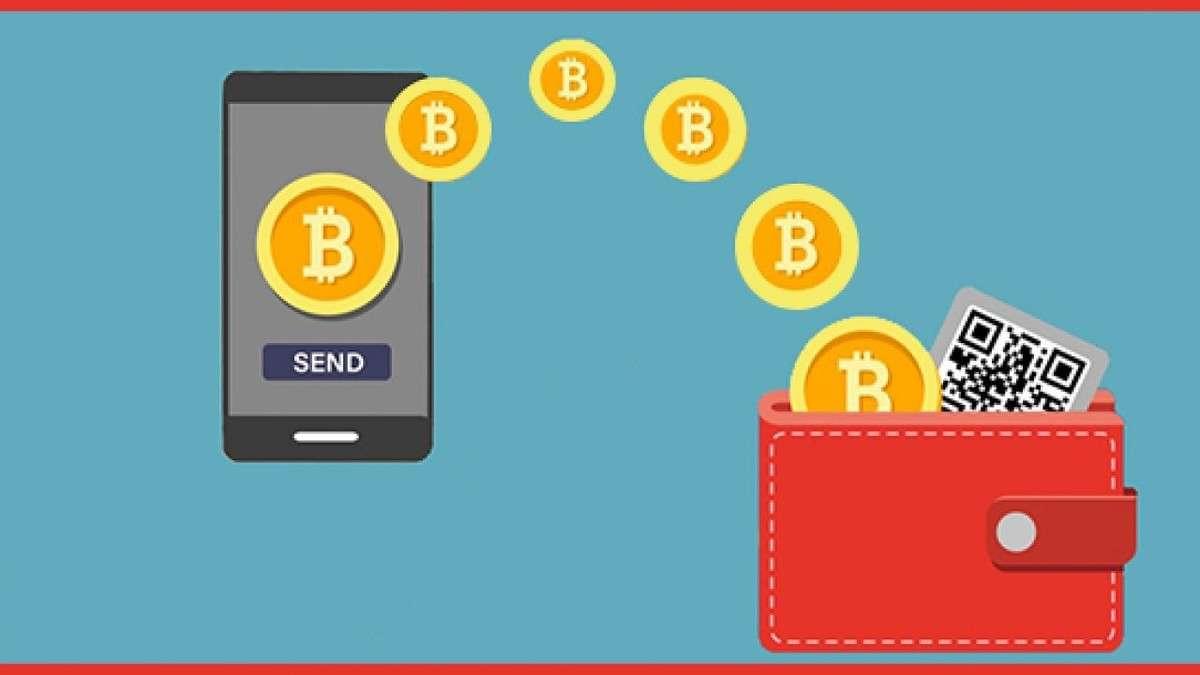
It means Ledger users will have seamless access to decentralized finance from multiple blockchains, including staking, swapping and providing liquidity on some of the most popular platforms in the space. A blockchain bridge connects two separate blockchain networks, allowing them to communicate and exchange data and assets. Blockchain bridges help break up these silos and bring the isolated crypto ecosystems together.
The exposure of hundreds of millions of email addresses puts pseudonymous users of the social network at risk. The crypto money-laundering market is tighter than at any time in the past decade, and the few big players are moving a “shocking” amount of currency. This article is intended to provide generalized information designed to educate a broad segment of the public; it does not give personalized investment, legal, or other business and professional advice. Before taking any action, you should always consult with your own financial, legal, tax, investment, or other professional for advice on matters that affect you and/or your business. Several bridges have already been built or are in development in the testnet stage for the Polkadot ecosystem.
What is decentralization?
Using proof-of-reserves ensures that funds are stored securely, and new tokens are minted at a 1-to-1 ratio. Every blockchain is different and has its advantages and disadvantages. A DApp or protocol can take advantage of each chain’s specific benefits by porting a token cross-chain. Having a token only on a particular chain limits the token to that chain’s specific capability. One recent hack was Solana’s Wormhole bridge, where 120k wETH ($325 million USD) was stolen during the hack.

Leave A Comment